


Legal Documents

Learn about common legal documents, contracts, notices, court forms, affidavits, agreements, and other paperwork frequently used in legal matters. Understanding legal documents can help individuals better prepare for legal situations and make informed decisions.

Understanding Common Legal Documents

Legal documents play an important role in many legal situations. Whether you are signing a contract, receiving a legal notice, preparing court paperwork, or reviewing an agreement, understanding the purpose of legal documents can help reduce confusion and improve decision-making.

This guide explains common legal documents individuals may encounter and provides general information about how these documents are used throughout legal processes.

Professional working on documents at desk with legal statue and magnifying glass.
Legal Agreements
Learn about contracts, settlement agreements, service agreements, and other legally binding documents.
Crop young female unemployed job seeker filling questionnaire sitting at table during interview in office
Court Forms
Understand common court forms, petitions, applications, and filings used in legal proceedings.
A professional individual signs legal documents at a desk in an office setting.
Legal Notices
Learn about notices, summonses, demand letters, and other official legal communications.
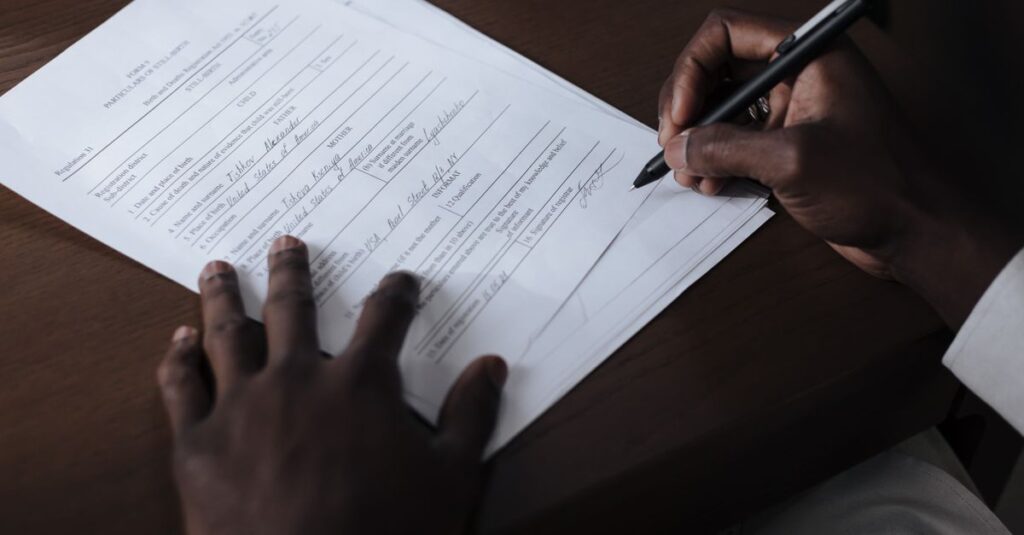
Hands signing a divorce decree, with a justice statue nearby, symbolizing legal proceedings.
Affidavits & Statements
Explore affidavits, declarations, witness statements, and supporting legal documents.

Why Legal Documents Matter

Legal documents help establish rights, responsibilities, agreements, obligations, and evidence in legal matters.

  • Understand Legal Obligations
  • Protect Important Rights
  • Document Agreements
  • Support Legal Claims
  • Reduce Misunderstandings

What You'll Learn

This guide introduces common legal documents and explains their purpose in various legal situations.

  • Contracts & Agreements
  • Court Forms
  • Legal Notices
  • Affidavits
  • Supporting Documents
  • Document Preparation Basics

Need Legal Help?

Legal documents can contain important information about rights, responsibilities, deadlines, and legal requirements. Reviewing documents carefully can help individuals better understand their situation.

If you have questions about a legal document or are unsure how it applies to your circumstances, consider consulting a qualified attorney or legal aid organization.


Common Situations

A professional reviewing documents in a car interior, focusing on hand and paperwork.

Reviewing a Contract

Understanding the terms and obligations contained in agreements and contracts.
Detailed close-up of a patent agreement document on a polished wooden table.

Receiving a Legal Notice

Learning how to review official notices, summonses, and legal communications.
A detailed view of a man signing official documents with a pen at a table.

Completing Court Forms

Preparing and organizing information required for legal filings and applications.
Three professionals engaged in conversation in a modern office corridor.

Providing Supporting Documents

Gathering records, statements, and evidence that may support legal matters.

F.A.Q.

Common questions about contracts, legal notices, court forms, affidavits, document preparation, and supporting legal records.
A legal document is a written record that creates, explains, confirms, or supports legal rights, responsibilities, agreements, or legal actions.
A contract is generally a legally enforceable agreement that creates obligations between parties. Some agreements may not be legally binding depending on their terms and circumstances.
A legal notice is an official communication that informs an individual or organization about legal rights, obligations, deadlines, claims, or legal proceedings.
An affidavit is a written statement made under oath or affirmation that may be used as evidence in legal matters.
Required documents vary by situation but may include applications, petitions, supporting records, affidavits, identification documents, and other required court forms.
Some legal documents require notarization while others do not. Requirements depend on the type of document and applicable laws.
Individuals should carefully review the document, understand its terms, verify information, and seek legal advice if they have questions or concerns.
Legal advice may be helpful when a document involves significant rights, financial obligations, legal disputes, contracts, court matters, or complex legal language.

Related Legal Resources

Browse additional guides that explain legal forms, supporting documents, evidence requirements, court procedures, and common legal terminology.

Detailed image showcasing a fingerprint document in an open folder, ideal for forensic and legal themes.

Evidence & Documentation

Understand how supporting records and evidence are used in legal matters.
A senior woman signing paperwork with a young professional assisting her at a desk.

Court Process Basics

Learn how legal cases typically move through the court system.
A professional woman in white jacket writing on a document clipboard during consultation.

Legal Checklists

Review practical preparation checklists for common legal situations.
Hands signing a divorce decree, with a justice statue nearby, symbolizing legal proceedings.

Legal Terms Explained

Understand common legal terminology, definitions, and phrases frequently found in legal documents and court paperwork.

Related Articles

No posts found.